
Brake fluid is one of those parts of car maintenance that many drivers do not think about very often. Oil changes get attention. Tires get attention. Brakes pads usually do too. But brake fluid tends to stay in the background until something feels off. That is a mistake, because brake fluid plays a direct role in how your vehicle stops and how safely the braking system performs under heat and pressure. Modern hydraulic brake systems rely on brake fluid to transfer force from the pedal to the brakes at each wheel, and that fluid also has to keep working with systems like ABS and stability control.
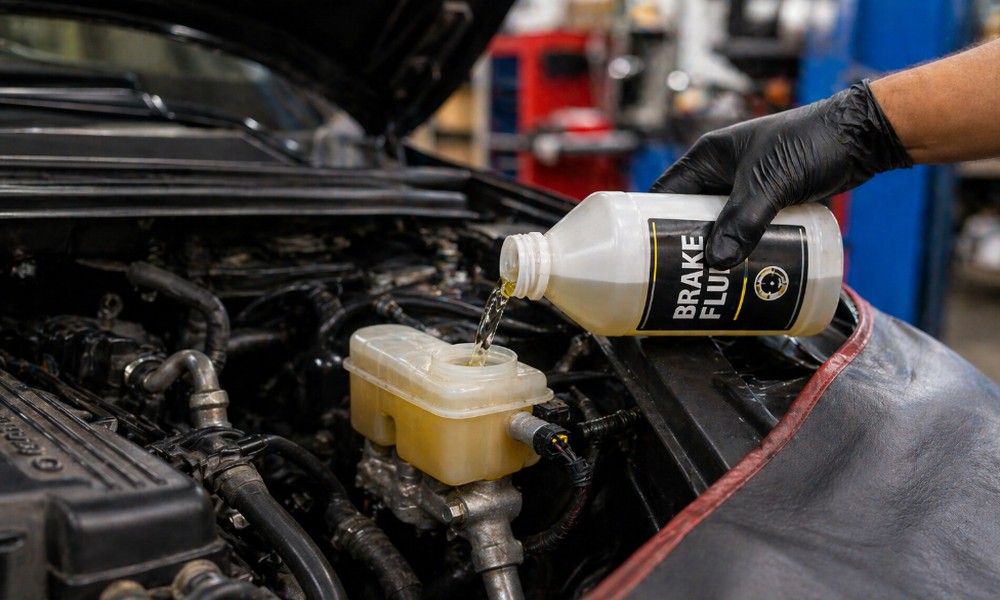
A brake fluid flush is the process of removing old brake fluid from the system and replacing it with fresh fluid. It is not the same as simply topping off the reservoir. Topping off adds fluid, but it does not remove contamination, moisture, or degraded fluid already circulating through the brake lines and components. A proper flush is meant to refresh the system so it can keep doing its job the way it should.
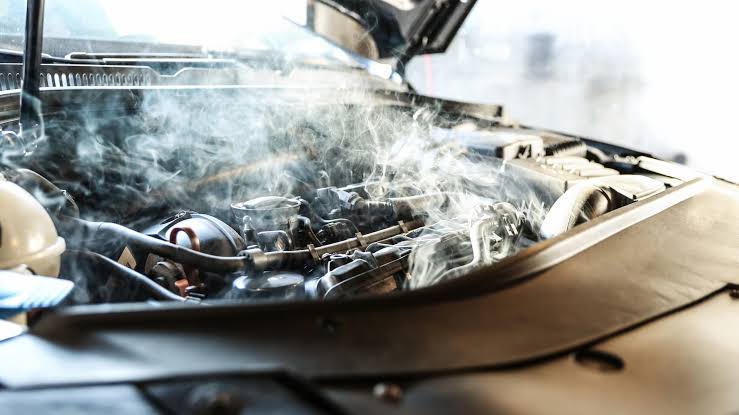
One of the biggest reasons brake fluid service matters is moisture. Most common brake fluids used in passenger vehicles absorb moisture over time. That might not sound like a serious issue at first, but it can become one. As water content rises, the fluid’s boiling point drops. Brake fluid needs a stable boiling point and viscosity to perform correctly under different temperatures and operating conditions. If the fluid heats up too much and starts to boil, it can create vapor in the system, and vapor does not transmit braking force the same way liquid does. That can lead to a weak or inconsistent brake pedal. Brake fluid condition also affects corrosion protection inside the system.
So, when is a brake fluid flush actually needed?
The most honest answer is this: it depends on the vehicle, the type of driving, and the fluid condition. Many vehicles follow a time-based maintenance schedule for brake fluid, often around every two to three years, though some manufacturers may suggest something a bit different. The safest starting point is always the owner’s manual. That matters because not all vehicles use the same fluid type or follow the same maintenance schedule. Some drivers assume that if the brakes still feel okay, the fluid must be fine. That is not always true. Brake fluid can age gradually and still look acceptable to the average driver while losing some of its protective and performance qualities.
There are also warning signs that may suggest brake fluid service should not be delayed. If the brake pedal feels soft or spongy, if braking response feels less consistent than normal, or if the fluid in the reservoir looks dark and dirty, it may be time to inspect the system. A brake warning light or low fluid level can also point to a problem, though low fluid may also mean worn brake pads or a leak, not just old fluid. In other words, a flush is important, but it is not a fix for every brake issue. Sometimes the fluid is part of the story, and sometimes there is a larger repair needed.
Heat is another reason this service matters more than people think. Braking systems deal with a lot of stress, especially in stop-and-go traffic, hilly areas, towing situations, or aggressive driving. Every time the brakes are used, heat builds up. Clean fluid with the proper boiling point helps the system handle that heat. Old fluid with moisture contamination is more likely to struggle under those same conditions. Even drivers who never push their vehicles hard can still end up with aging brake fluid simply because time and humidity do their work slowly in the background.
A brake fluid flush also matters because the braking system is not only about stopping distance. It is also about consistent pedal feel, predictable response, and reliable performance in emergencies. When you step on the brake pedal hard, you want the system to react the same way every time. Hydraulic brake systems are designed around controlled brake fluid pressure, and that pressure supports not only normal braking but also safety features such as ABS, traction control, and electronic stability control.
Some drivers ask whether brake fluid can just be left alone indefinitely if the vehicle is not driven much. Usually, that is not a good idea. Low mileage does not always protect brake fluid from aging because moisture absorption is often related to time as much as use. A car that sits a lot may still need brake fluid service if enough time has passed. In fact, vehicles that sit for long periods sometimes develop maintenance issues precisely because fluids age even when mileage stays low.
It is also worth understanding what a flush does not do. It does not replace worn brake pads, fix warped rotors, repair leaking lines, or solve mechanical brake failure on its own. If there is air in the system, a leak, or damaged hardware, those issues need direct repair. But as preventive maintenance, a brake fluid flush can help support the overall health of the braking system and reduce the chance of performance problems tied to old fluid.
From a practical point of view, brake fluid service is one of those maintenance items that may not feel urgent until the day it does. And by then, the timing is not ideal. Preventive service is usually far easier than dealing with poor brake response when you actually need the vehicle to stop quickly.
In the end, a brake fluid flush matters because brake fluid is not a lifetime fluid. It ages. It absorbs moisture. It can lose some of the qualities the braking system depends on. Replacing it at the right interval helps maintain safer, more reliable braking performance. The exact timing may vary by vehicle, but the basic idea stays the same: if you want your brakes to work the way they should, the condition of the fluid deserves more attention than it usually gets.
This post was written by a professional at Tires2Go Florida. Tires2Go Florida is a trusted automotive service center located in Pinellas Park, Florida, serving drivers across St. Petersburg, Tampa, Clearwater, and Largo. Our certified mechanics handle tires online and wheel replacement, brake service, suspension repairs, oil changes, wheel alignments, tire balancing, and road force balancing. We also specialize in ADAS calibration, suspension modifications, lift kits, and lowering kits using quality parts and modern diagnostic equipment. From routine maintenance to advanced automotive services, Tires2Go Florida provides dependable solutions and tires for sale for vehicles throughout the Tampa Bay area.